
On the Road in Utah: Visiting Arches, Bryce Canyon & Zion National Parks
Have you ever taken a vacation focused on visiting one or more of America’s beautiful national parks? The photos from our family road trips to iconic parks like the Grand Canyon, Yosemite, and Zion will always have a special place in my heart. It started with a road trip to explore the Four Corners region and beyond in the Southwest, with a goal to see a half dozen national parks.
The proximity of Utah’s spectacular park landscapes makes it easy to visit several parks on the same trip. All in all, we spent 13 days exploring, driving from Albuquerque, New Mexico, through Colorado, Utah, and Arizona, then back to New Mexico. The places we visited on that trip have some of the most unusual geologic formations in the U.S., and include three of Utah’s Mighty 5 national parks.
Since that road trip, family members have returned to re-explore these 3 special places and their quiet beauty. So come along on the road in Utah: visiting Arches, Bryce Canyon and Zion National Parks to find things to know and tips to help you plan a visit to these unique national parks in Utah.
For 2025, visitors to Arches National Park needed a timed entry ticket between April 1st and July 6, then again between August 28 and October 31st (7 am to 4 pm). At Zion National Park, permits are currently required for the Angels Landing. Check the individual national park websites for the most current information about reservations for both entrance and specific hikes.
*This post contains affiliate links; if you purchase something familyTravelsUSA may receive a small commission. As always, opinions are my own.
Table of Contents
Getting There
There are many options for exploring Utah’s parks, including the itinerary in our Southwest Road Trip. Salt Lake City and Las Vegas are also popular starting points to explore Utah’s Mighty 5: Bryce Canyon, Zion, Arches, Canyonlands, and Capitol Reef. Another option is a road trip from Las Vegas to Zion and Bryce Canyon, with the addition of the Grand Canyon before heading back to Las Vegas. Utah is also home to picturesque state parks you can add to your itinerary, including Kodachrome Basin. Finally, check out this action-packed 8-day Colorado to Utah road trip which begins in Denver, with stops at both national and state parks in Utah and Colorado.
Looking back over our Southwest Road trip, I regret not adding a stop at Canyonlands National Park, after realizing its proximity to Arches and hearing a fellow traveler tell us he thought it was more scenic than the Grand Canyon. Since then, both my husband and daughter have gone hiking and backpacking in Canyonlands and highly recommend it! I have learned a great deal about road trip planning in the years since that trip, and will definitely be returning to Utah for more exploration.
Learn more about the timed entry reservation system
at Arches National Park.
Arches National Park
The first park we visited in Utah was Arches National Park, easily accessed from nearby Moab. We stayed in cabins at the Archview RV Resort and Campground (now Sun Outdoors Canyonlands Gateway), just a short drive to the entrance to Arches, which made it easy to beat the summer heat with an early start. I always suggest stopping at the Visitor Center first to chat with the rangers to get their insights and recommendations.
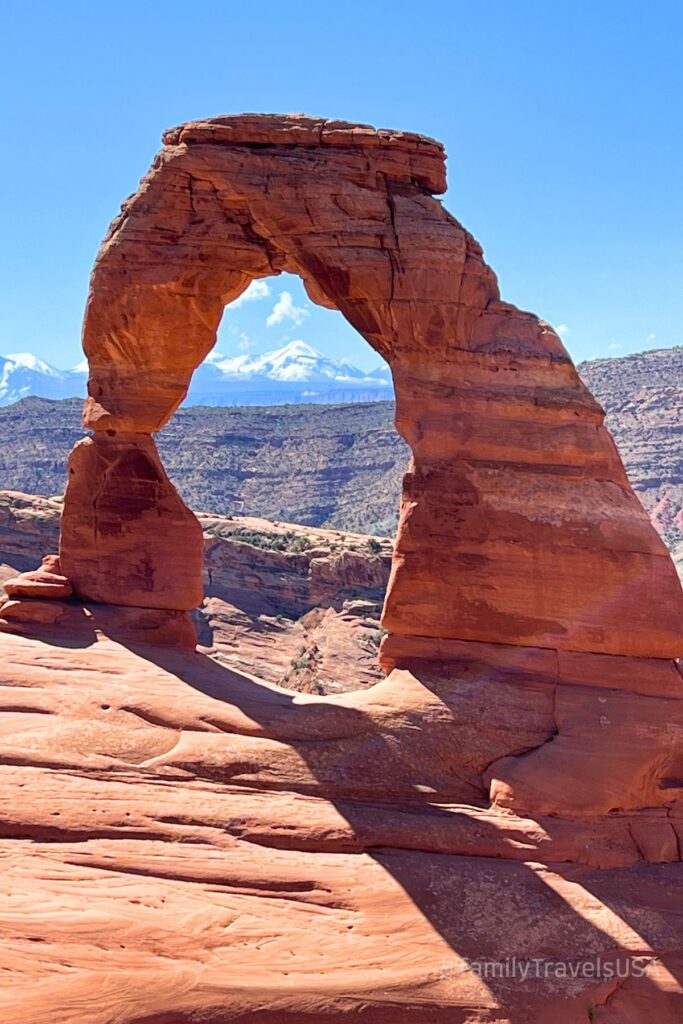
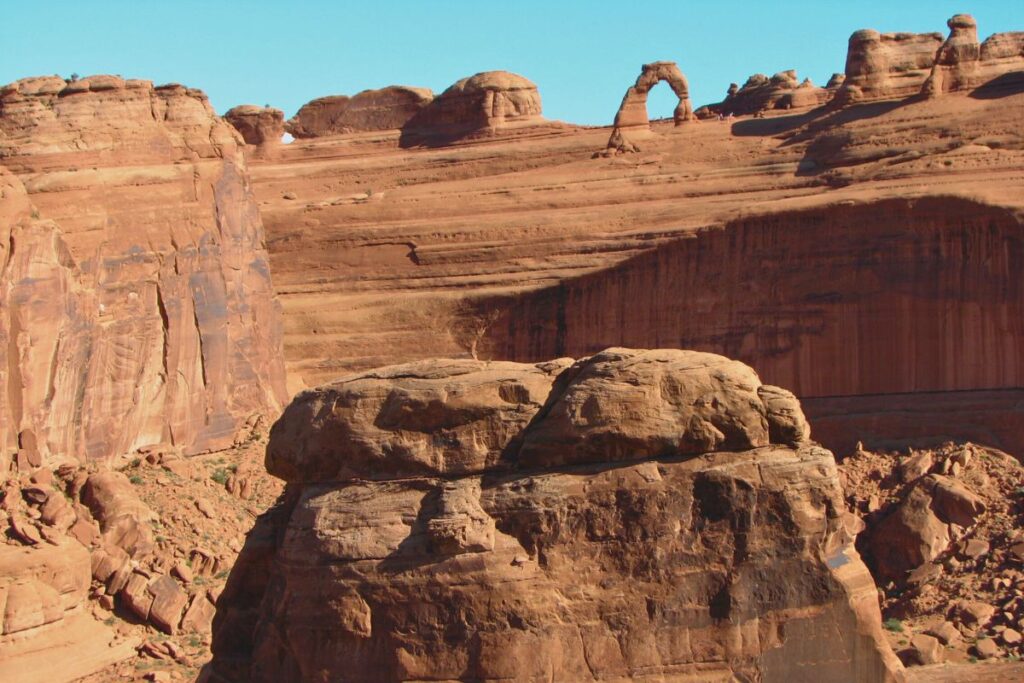
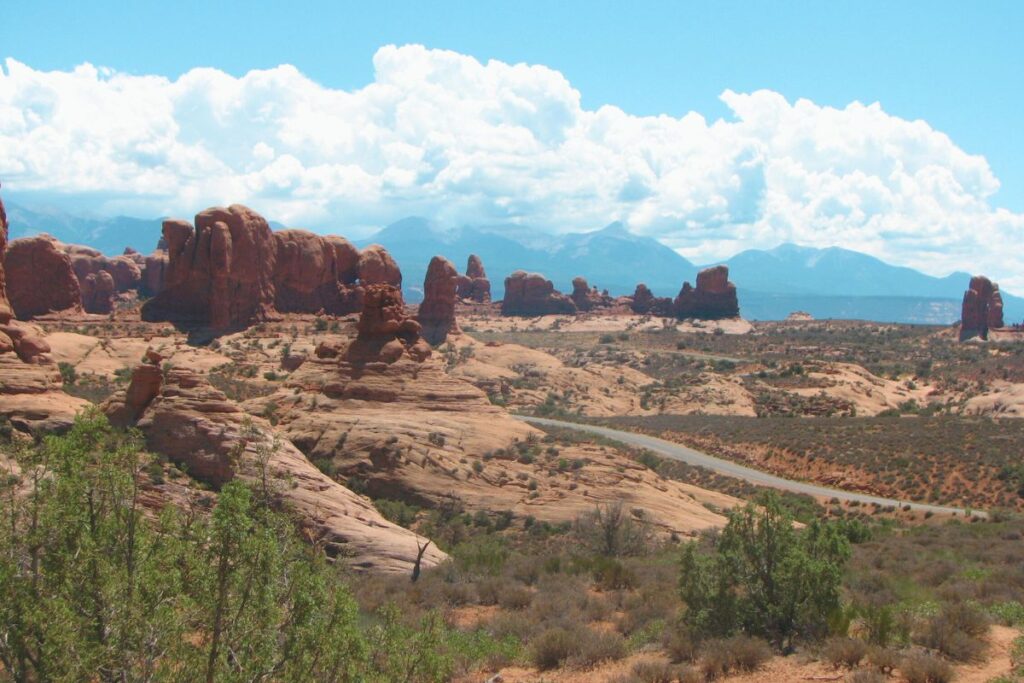
Expect to feel like you have crash landed on Mars as you drive by random arches, red rocks, and strange shapes on the side of the road. With over 2,000 natural arches, you’ll have plenty of opportunities for up close viewing of these amazing sandstone formations. You can drive through the park in a day, and have plenty of time to see many of the popular attractions. We stopped often, taking short hikes for up close views of spots like Balanced Rock, The Windows, and Double Arch. Longer hikes include the one to Delicate Arch, pictured here, which other family members have done on return visits to Arches.
Hiking, auto touring and ranger-led programs are all popular options for families. Use the self-guided driving tour in the National Park app to visit the popular viewpoints. Be sure to download the app for offline use prior to your visit, as there is typically limited cell service in most parks. Photographers will love to capture unique sunrise and sunset scenes with dramatic backdrops. It’s on my bucket list to return and photograph the early morning or late evening sky. During the summer months, head out early in the morning to get ahead of the crowds and the heat.
Consider taking along The Road Trip Survival Guide: Tips and Tricks for Planning Routes, Packing Up, and Preparing for Any Unexpected Encounter Along the Way
Bryce Canyon National Park
Plan for a 4 hour drive from Arches to Bryce Canyon National Park. Keep in mind that the weather can change quickly at any time of year, as we found out when we encountered a major hail storm driving along Interstate 70. Spend the night at Ruby’s Inn, as close as you can get to Bryce Canyon without staying in the park.
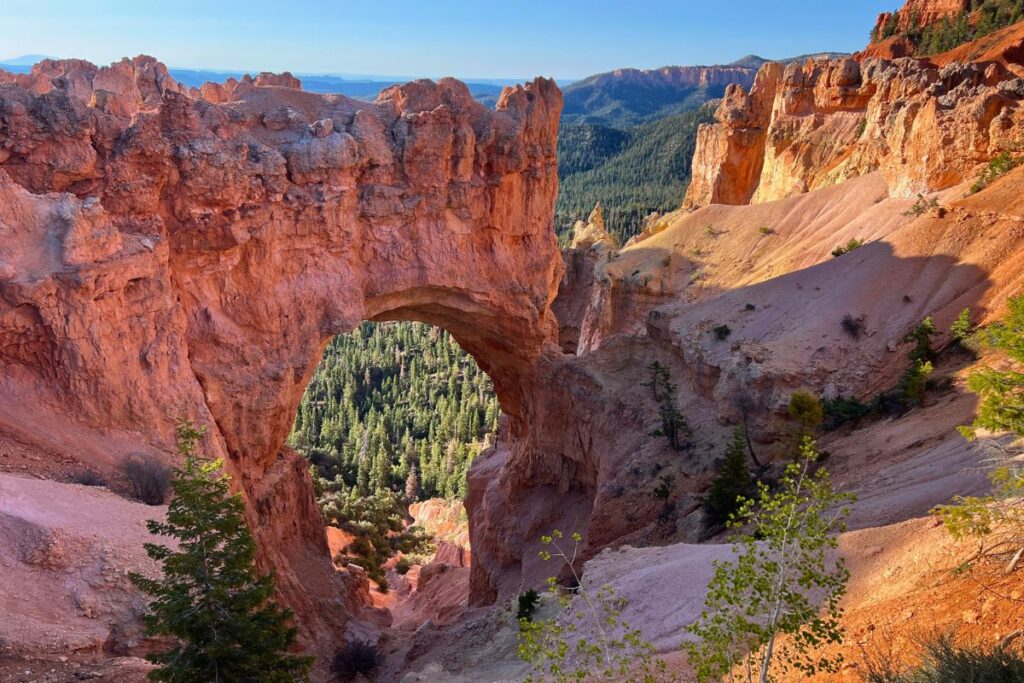
It was a gorgeous August morning when we first entered Bryce Canyon. Memories of first seeing the orange, odd-shaped rocks called hoodoos against the vivid blue sky still take my breath away. It’s a surreal experience as you survey the area from the numerous overlooks across Bryce.
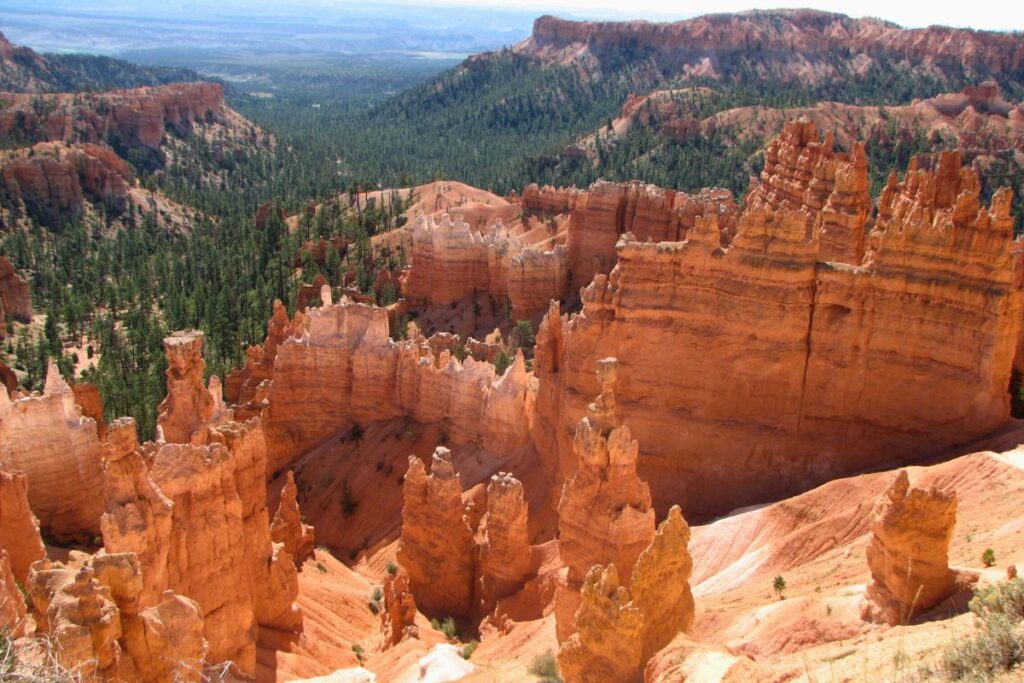
I loved that there were many options for hiking in Bryce Canyon, and would highly recommend the popular Queens Garden Trail which begins at Sunrise Point. It’s one of the easiest ways to enter the canyon. We combined that with the popular Navajo Trail, which took us into the main amphitheater of the canyon and out through Wall Street, a slot canyon at Bryce. The whole trail combination was less than 3 miles long. Keep in mind while hiking that the elevation starts around 8,000 feet. Dress in layers that can be added or removed, don’t forget a wool hat and sunscreen.
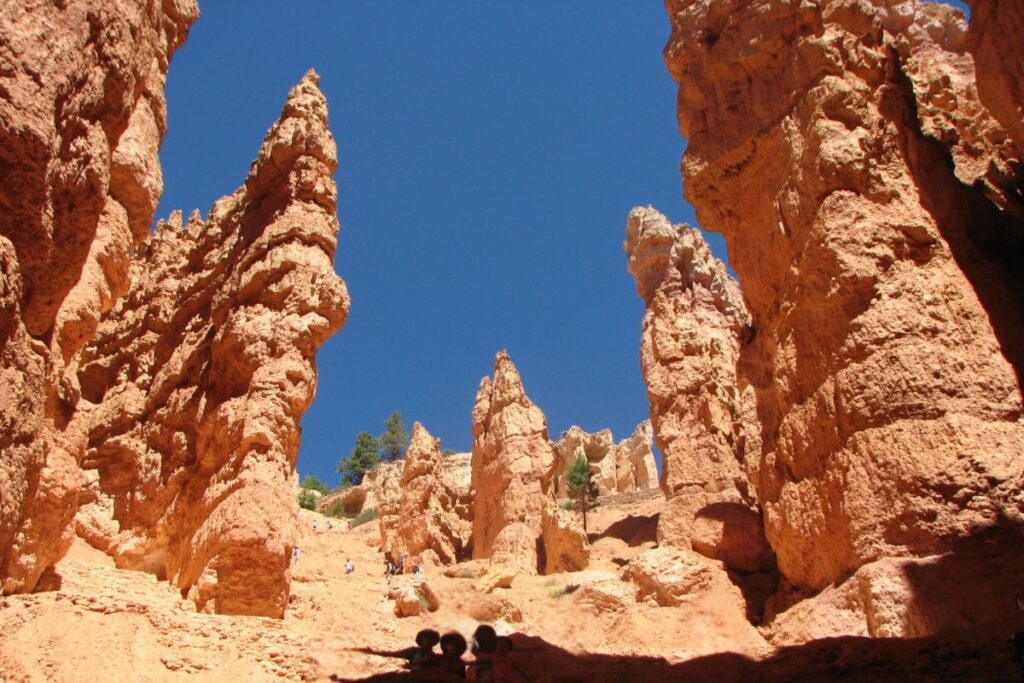
Even with younger kids, you can really see most of the park and take cool hikes. Since our initial visit, both my husband and daughter have returned to further explore this special place. When the sun goes down, be sure to step out and experience the amazing night sky. The park offers special night-time programs, including Astronomy Programs and Full Moon Hikes.
The night sky is one of the best, with the park website boasting that on a moonless night you can see thousands of stars! A winter ranger-led snowshoe hike is definitely on my bucket list! No matter what time of year you visit, there is always something to do. Be sure to bring plenty of water, especially during the summer months.
Zion National Park
The trip from Bryce Canyon to Zion took just under 90 minutes. Our first stop was Driftwood Lodge, about two miles from the south Zion entrance. The hotel was one of our trip’s favorite family-friendly hotel experiences, with huge rooms, outdoor space, and spectacular views of the park from the patio and pool deck. The lodge has undergone several renovations since our visit, including the addition of pet-friendly rooms. A great perk is the shuttle from the hotel to the park entrance.
For the in-park shuttle, read information about the Zion Canyon Shuttle System before you visit. From roughly March to November, you will need to take the park shuttle to explore the most popular areas of the park along the Zion Canyon Scenic Drive.
Our day began early, with an educational Ranger-led “Morning Meander” along the Virgin River. It was a 90 minute stroll, perfect for younger kids, and a good way to see Zion in the morning light. Next up were the Lower & Upper Emerald Pool trails, with beautiful views including walking under a waterfall.
As the day got warmer after lunch, we decided to saddle up and take a horseback ride. My youngest was 7 at the time, and we still laugh over memories of her horse Jenna stopping to eat at every bush along the way. The one hour ride took us along the river to the dramatic Court of the Patriarchs. Not having to hike helped us beat the heat and still be in the midst of this stunning national park.

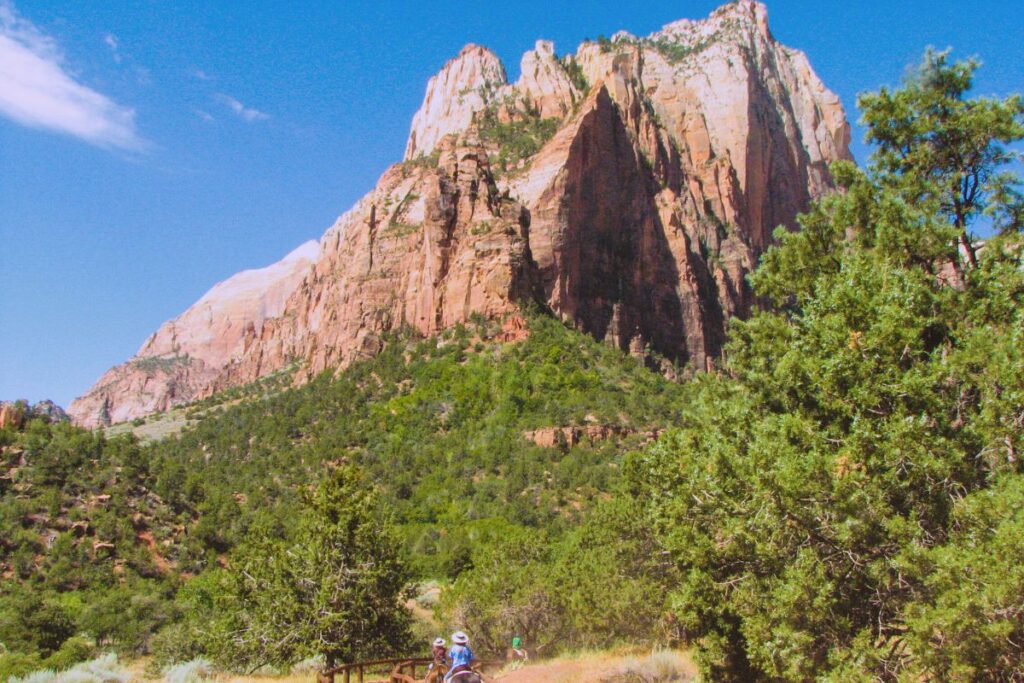
Given the age of our kids and level of hiking experience at the time we first visited Zion, we didn’t attempt any of the more challenging hikes like the Narrows or Angels Landing. My husband, an avid hiker, returned recently and spent several days exploring Zion with the hopes of getting a day-prior hiking permit for Angels Landing. Sadly… no luck. He opted to hike Scout’s Landing, which turned out to be a spectacular alternative that ascends roughly 1000 feet with 90% of the same views.
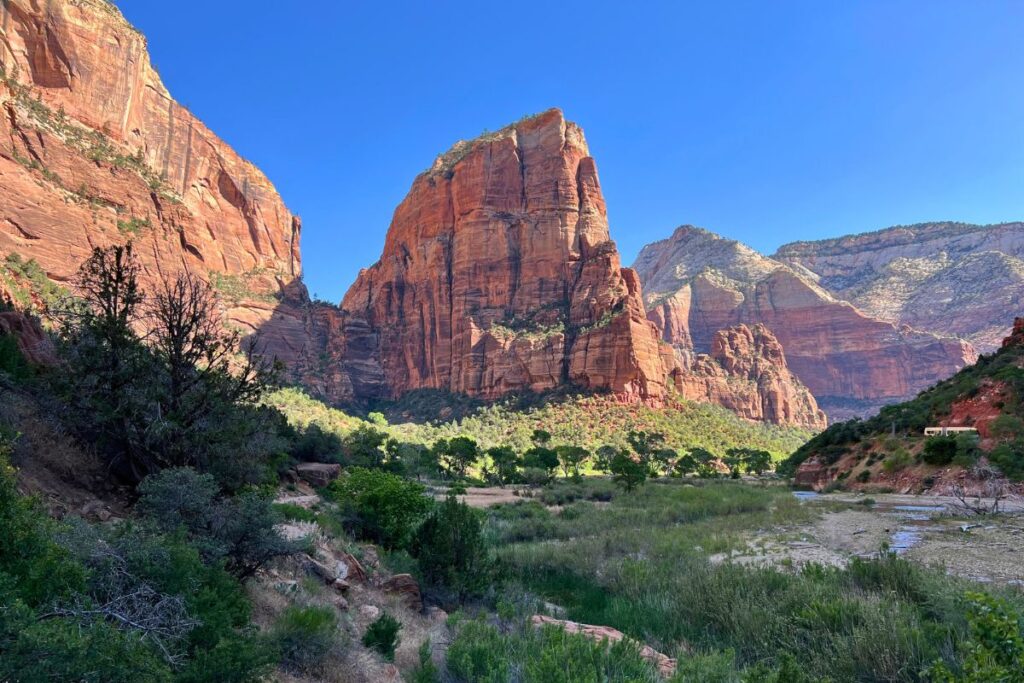
Both my husband and daughter recommend taking the shuttle to Stop 9, the end of the line, and hike the Riverside Trail, leading to the beginning of the famous Narrows. From here (considered the bottom-up Narrows), you can experience a portion of the Virgin River hike in the Narrows, without a permit. Local organizations outside the park offer appropriate gear to rent to make this wet hike in the Virgin River safe and enjoyable; it’s important to plan ahead and know what to expect on this unique hike.
Tips for Visiting National Parks
We have learned a lot over the years, and encourage you to visit our National Parks Tips and Resources for details. Here are a few of our basic tips:
- Download the National Park App before you go. Then save the park for offline use, which is helpful when there is spotty service out on the trails. We’ve found it useful for access to park alerts, trail maps, self-guided driving tours, and visitor center hours.
- Be Prepared! Always check the latest weather forecast, dress in layers, and ensure you have food and water. We recently learned that having a basic first-aid kit with a few needed items like butterfly bandages is vital when you are out on the trail.
- Get up early! We almost always find that just getting an hour head start on the crowds can make a huge difference in your park experience, as evidenced by the trails getting crowded as we were making our return trip.
- Check in with park rangers about potential weather issues, especially chances of rain and flash flooding.
- Pack lots of water along with lunch and snacks. There is nothing better than having a picnic at a beautiful scenic overlook, even if it’s just a peanut butter and jelly sandwich. Consider a refillable water bottle like this one from IRON °FLASK, as it’s especially important to have lots of water during the hot summer months in Utah.
- Check the park events page online before you go to see if there are any special programs that will be happening during your visit. I’m a planner, but I’ve found that it helps if you are trying to map out a day’s worth of hiking or ranger-led activities. When my kids were younger, they loved the Junior Ranger Program and it helped to make the visit more meaningful for them.
- Before you go, it’s always a good idea to check each park website for current conditions and alerts that may impact your visit, especially during the busy summer months. Take advantage of all the great information the parks have put together to make your visit as stress-free as possible, especially as the number of visitors has increased. Remember to #RecreateResponsibly.
- Follow the national parks on their respective social media pages; it’s a good resource for up to the minute news about things like road closures and weather issues.
- Find more resources for planning a national park road trip here; Visit Utah has national park itineraries ranging from 3 to 10 days.
- Remember, our National Parks are treasures to be enjoyed by all. So get out there and find your closest park. And don’t forget to take advantage of fee-free days, annual park passes, and the Every Kid Outdoors pass.